greatest gift we could offer a young child wasn’t the latest tablet, app or “educational” video — but something far simpler? A wiggle. A crawl. A stretch. A roll. A shared giggle.
Gillian Scott
May 1, 2026
Why Movement Matters: Helping Children Build Better Brains in a World Full of Screens
Whatif the greatest gift we could offer a young child wasn’t the latest tablet, app or “educational” video — but something far simpler? A wiggle. Acrawl. A stretch. A roll. A shared giggle. Movement may look ordinary, but one of the most extraordinary forces shaping the developing brain.
At With Kids, we've spent years watching early childhood change. In nurseries, P1 and P2 classrooms, playrooms and family homes, one pattern grows clearer every year: our youngest children are moving less. Screens have slipped into quiet corners of daily life, offering parents a breakand children a quick hit of entertainment. But while a screen keeps a child still, the brain is waiting for something else entirely — the full‑body,playful movement that builds emotional regulation, attention, confidence and connection.
We see what happens when movement is missing. Some childrentrip on flat floors or edge along walls when going down stairs. Others walkstiffly, cautiously, as if their bodies are working harder than everyoneelse’s. These aren’t signs of clumsiness; they’re signs of underdevelopment —tiny gaps in early sensorimotor experiences that should have happened longbefore a child learned to walk or run. And this is where the story becomeshopeful, because underdeveloped systems aren’t broken. They can be rebuilt,strengthened and supported through movement, relationships and play.
The Play & Move Project at With Kids was born from thisunderstanding — and from the BUSS® model (Building Underdeveloped SensorimotorSystems), which shows how a child’s early movement and early relationships areintertwined. Babies grow into their bodies through rolling, crawling, pushingup, reaching, balancing, climbing. But they only do this when they feel safe.Without predictable, attuned care, babies move less, explore less, and miss outon the movements that prepare the nervous system for everything that comeslater. When we meet children who didn’t get those early experiences, we don’tblame behaviour. We look beneath it. We rebuild what was missed.
That’s the heart of Play & Move: to make theserestorative, joyful movement experiences accessible anywhere. In our PlayTherapy Hub — and soon in community spaces, nurseries, and homes — we arecreating playful illustrated resources that invite children to use their wholebodies again. Wall posters to trace with both hands, floor trails that bringback cross‑crawling and sequencing, bubble mountains to blow, commando‑crawlingpaths to strengthen shoulders and core, visual‑motor challenges that delightrather than demand. They look like games, and they are. But they also quietlystrengthen the foundations children rely on for regulation, learning andwellbeing.
And because movement without relationship is only half thestory, families sit at the centre of this project. We work alongside parentsand carers — not instructing, but collaborating — because they are the expertson their children. Our role is to add a developmental lens, to explain why achild who can’t sit still might actually need more movement, not less. Why achild who struggles with focus might first need support with balance. Whyrebuilding the body’s foundation often frees emotional space, cognitive spaceand even joy.
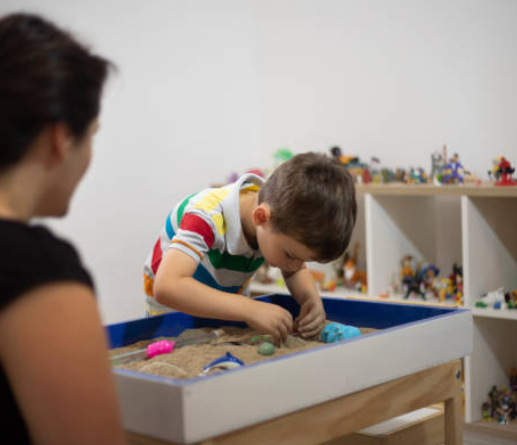
This, too, connects directly to our wider work. For 17years, With Kids has delivered Play Therapy across Scotland, helping childrenwho have lived through trauma, instability or neglect make sense of theirworlds. Play Therapy acknowledges a simple truth: when children don’t have thewords, they play their stories. Through safe, child‑led play, children learn totrust, to regulate, to express what once felt overwhelming. And through ourBaby and Family Support Hub, we offer families the stability, respect and non‑judgementthey need during pregnancy and the first crucial 1,001 days of life.
The Movement Wall Project expands this vision even further.These bright murals — painted across walls and floors — invite children intomovement without instruction or pressure. They entice curiosity. A child sees apainted trail and instinctively wants to follow it. They stretch, crawl, cross,reach, blow, sequence, balance. And while they’re playing, they’re rebuildingcore strength, sensory integration and self‑belief. Parents rediscoverthemselves as co‑players, not spectators. Teachers find new tools that helpchildren settle and focus. Children begin to feel more at home in their ownbodies — a shift that changes everything.
Because when movement becomes playful again, behavioursoftens. Attention steadies. Sleep improves. Relationships warm. Learningopens. A child who feels strong and safe in their body is freer to explore,engage and simply enjoy being a child.
This is what Play & Move is about: returning movement toits rightful place at the centre of early development. Replacingoverstimulation with organisation. Replacing disconnection with attunement.Offering families simple, joyful tools that strengthen the brain from thefoundation up.
We’re at the beginning of something powerful — andprofoundly simple. When children move, they grow. When they move with someonewho loves them, they flourish.